
Description
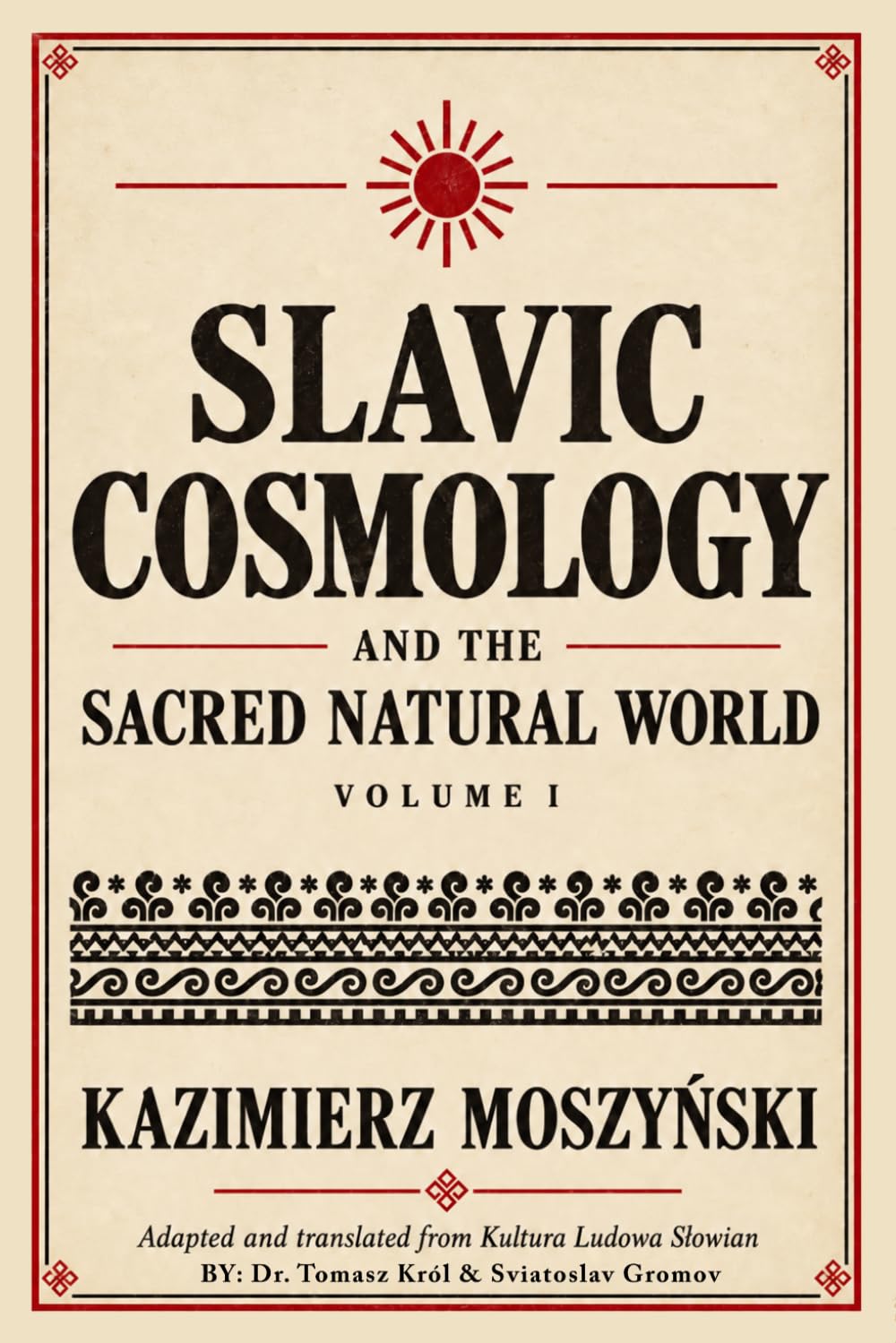
Slavic Cosmology and the Sacred Natural World
by Kazimierz Moszyński
How did the Slavic peoples understand the heavens, the earth, and the living world around them?
Kazimierz Moszyński spent much of his career documenting the traditional culture of the Slavic peoples. His Kultura Ludowa Słowian drew on decades of his own fieldwork as well as the records of ethnographers, collectors, philologists, and travelers who worked before him. His research ranged across Poland, Ukraine, Belarus, Russia, the Balkans, and the wider Slavic world.
Slavic Cosmology and the Sacred Natural World is the first volume in this English-language series. It begins with the world as Slavic villagers understood it: the shape of the heavens, the movements of the sun and moon, the stars, weather, plants, animals, and the landscape around them. From there, Moszyński turns to the beliefs connected with those same parts of the natural world.
The subjects covered include the sky and sun, the moon, eclipses, Venus and the stars, clouds and the rainbow, wind, thunder and lightning, fire, water, earth, stones, plants, trees, and herbs. Later chapters examine beliefs concerning animal souls and supernatural beings, along with traditions surrounding domestic animals, snakes, weasels, birds, wolves, bears, and deer.
What makes Moszyński’s work especially useful is its scope. He compares traditions recorded in different Slavic regions, noting where beliefs agree, where they differ, and where similar ideas appear outside the Slavic world. He is also careful about what the evidence can actually tell us. These traditions were recorded after centuries of Christianity and cannot simply be treated as an unchanged survival of medieval Slavic religion. Moszyński repeatedly considers whether a belief appears old and widespread, borrowed, recent, or supported only by limited evidence.
This edition is adapted and translated from Kultura Ludowa Słowian. Moszyński’s section numbers, footnotes, source citations, quotations, regional distinctions, and much of his original terminology have been retained so that the material can still be traced back to the original work.
Reviews
There are no reviews yet.